
Importance Of Social Distancing Resembled In 3-D Simulation

Sen. Lindsey Graham Absolutely Shreds The Left’s Effort To Destroy Trump [WATCH]
April 14, 2020
Candace Owens Stopped By Police For Not Wearing Mask
April 15, 2020The New York Times shared a simulation to show why social distancing is so important and it’s actually pretty interesting.
As much as I despise the isolation and everything we love being closed down, maybe this will teach people not to breathe down your neck while waiting in line.
While the World Health Organization (WHO) recommends three feet of distance between people at the very least, the Centers for Disease Control and Prevention recommend six feet of separation for the utmost benefit.
The 3-D simulation provides a visual for a better understanding of transmission routes for the virus.
You can visit the website to view the simulation HERE, but here are a few pictures.
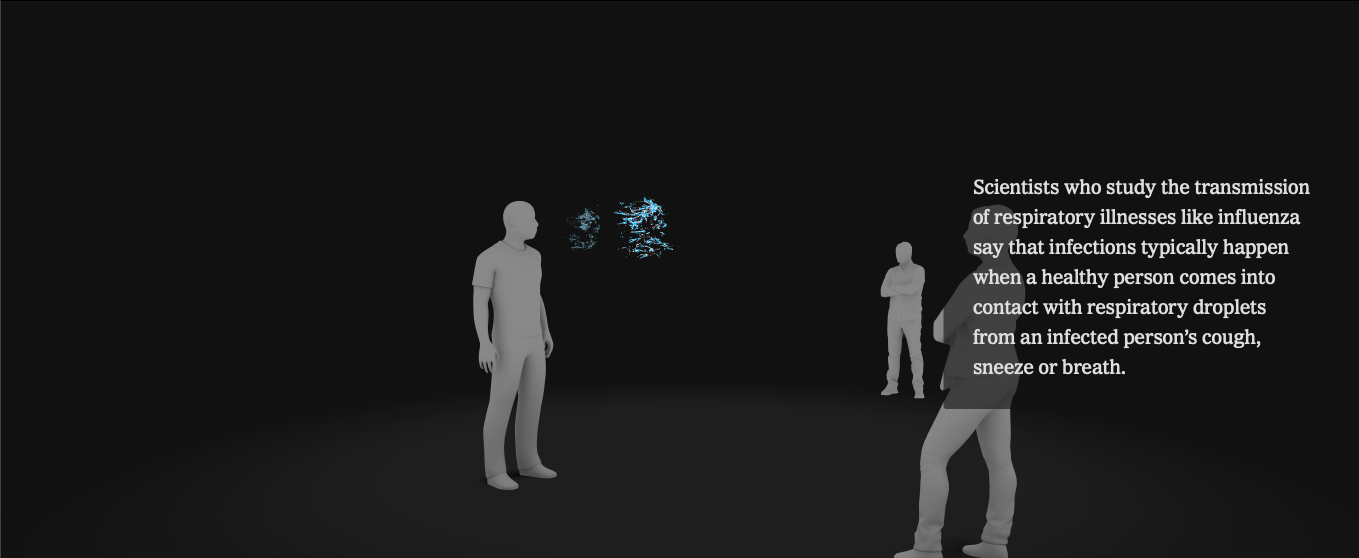
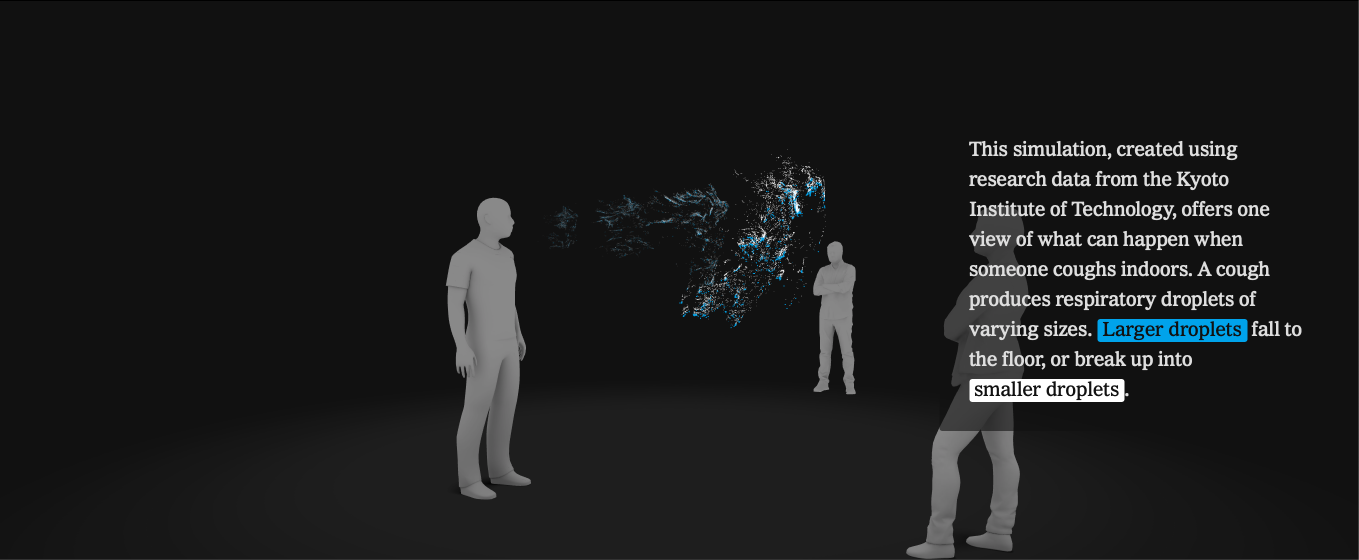
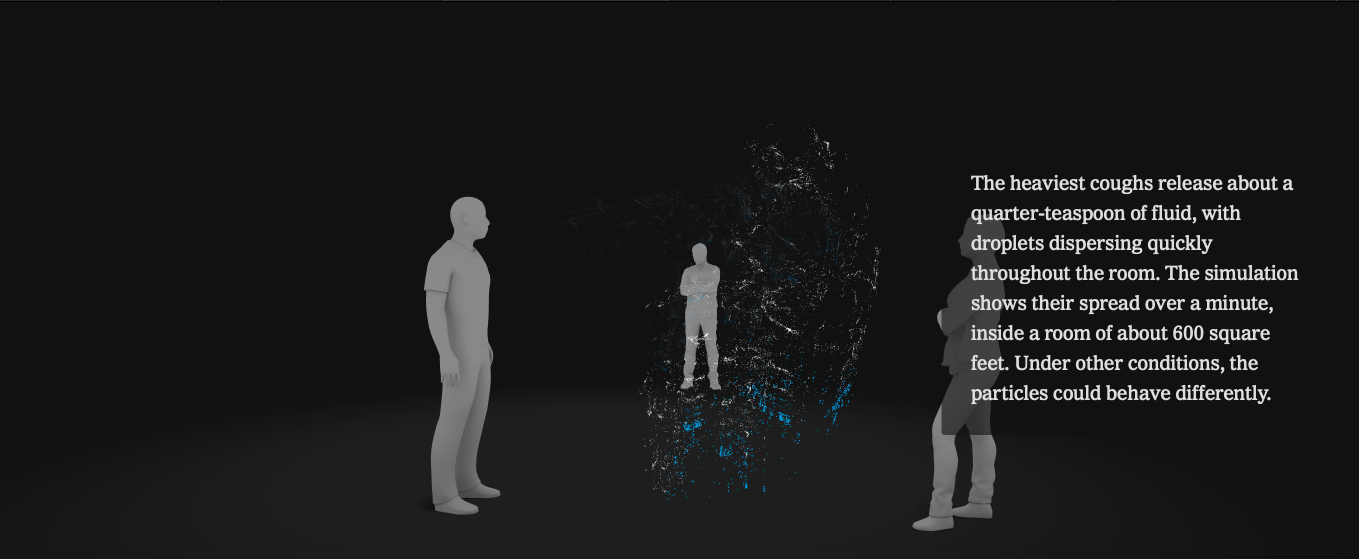


An infectious aerosols scientist by the name of Donald K. Milton says that the droplets act more like a continuum, as opposed to the common misconception that they just dissipate after reaching a six foot distance.
According to the New York Times:
In fact, researchers at M.I.T. studying coughs and sneezes observed particles from a cough traveling as far as 16 feet and those from a sneeze traveling as far as 26 feet.
All of this suggests that keeping a distance of six feet or more can greatly reduce the possibility of transmission, compared with being closer. “The farther you get away, the more diluted it is,” Dr. Milton said of the aerosol.
Coughing and sneezing may not be the only causes for concern. Studies of influenza have shown that infected people with mild or no symptoms may also generate infectious droplets through speaking and breathing.
An infected person talking for five minutes in a poorly ventilated space can produce as many viral droplets as one infectious cough. “If there are 10 people in there, it’s going to build up,” said Pratim Biswas, an aerosols expert at Washington University in St. Louis.
Perfect, so we’re all just a bunch of walking buckets of disease anyways! YAY.
