
The Message Behind Dictionary.com’s #WordOfTheYear2018 Is Nauseating

Secret Service Paid Tom Arnold A Visit…
November 26, 2018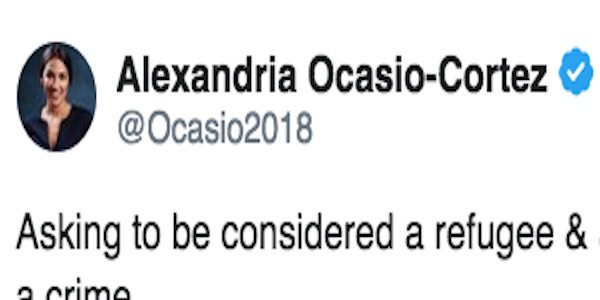
Alexandria Ocasio-Cortez Compares Rock-Throwing Migrants To Jews Fleeing Nazi Germany
November 26, 2018Sometimes, Dictionary.com tweets a few solid zingers (it’s no where NEAR Wendy’s), but it’s pretty clear their Twitter account is managed by liberals. If this tweet didn’t prove that…
When the words “monkey this up” are used to refer to electing a man of color, that would be a blatant … https://t.co/SaLDWdlUgF https://t.co/r9yNl2DF4P
— Dictionary.com (@Dictionarycom) August 29, 2018
…this one does.
The truth is, the #WordOfTheYear2018 is misinformation. Because words matter.https://t.co/g928wHdtdU
— Dictionary.com (@Dictionarycom) November 26, 2018
Regardless of how it spreads, misinformation is particularly rife when it comes to some specific areas.
In early November, fact-checkers from the Washington Post shared their record of all the false or misleading claims President Trump has made since becoming president. As of the time of that report, the count was at 6,420, an average of about 10 false or misleading claims a day. These claims are heard around the world and believed by many.
Riiiight. Because misinformation didn’t exist until Trump became POTUS. There was no misinformation from 2008 (during O’s campaign) through 2016. If you like your healthcare plan, you can keep your healthcare plan!
I remember that golden era when politics was filled with truth-tellers who would never lie about Iran, keeping your doctor, executive orders…Man, good times. https://t.co/BdIAfLHDOj
— Ben Shapiro (@benshapiro) November 26, 2018
The #WordOfTheYear2019 should be dictionary.
Because a dictionary is not an activist newsletter.
— Rosco Roberts (@RoscoRoberts1) November 26, 2018
Good lord you’re a dictionary. Stay out of politics. Morons.
— shrnova (@shrnova1) November 26, 2018
Honestly, Dictionary.com should’ve just attached some articles from The New York Times and clips from CNN next to the word “misinformation.”
The mainstream media is the problem. YOU are the problem, Dictionary.com.
h/t Twitchy
