
Three Republicans Likely Voting Against President Trump’s National Emergency

Household Name To Replace Kathie Lee Gifford on NBC’s ‘Today’
February 26, 2019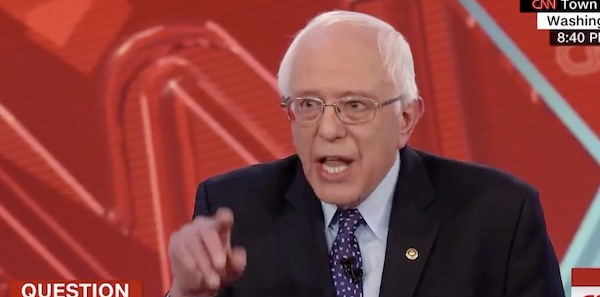
Trouble In (Socialist) Paradise? Three Top Bernie Aides WALK OUT
February 26, 2019Because Congress is incapable of doing anything right, President Trump was forced to declare a national emergency on our Southern border. It’s the only way we’ll ever see progress on the wall. Let’s be real.
Congress is going to attempt to pass a resolution to block the emergency, and yes. There are a few Republicans on board.
Sen. Thom Tillis is one of them.
“As a U.S. senator, I cannot justify providing the executive with more ways to bypass Congress,” he wrote in an op-ed. “As a conservative, I cannot endorse a precedent that I know future left-wing presidents will exploit to advance radical policies that will erode economic and individual freedoms.”
Here’s the thing: I think future lib presidents will exploit it to advance radical policies NO MATTER WHAT Trump does or doesn’t do.
The other iffy Republicans? Collins and Murkowski. Big shocker there.
Republicans control 53 seats in the chamber. If all Democrats vote for it, they will still need four Republican votes to help them stop Trump’s national emergency declaration. They have two, now that Tillis and Maine Sen. Susan Collins, who’s also up for re-election in 2020, have said they’ll join.
Other Republicans have also expressed concern about Trump’s decision to declare a national emergency as well.
Sen. Lisa Murkowski, a moderate Republican from Alaska, told a home-state TV station that she would “probably” support the proposal of disapproval.
But listen– she still cares about national security! Don’t get it twisted!
“Not because I disagree with the President when it comes to border security, (or) certainly national security, but because I think it’s so important that there be clear lines when it comes to the separation of powers,” Murkowski explained. “There’s going to be a great deal of debate as to whether or not the legal authority is there. I would suggest there probably is. The question is … is this over and above the authority that has been granted specifically to the Congress itself?”
The resolution will likely go nowhere. Democrats would need four Republicans to join them (so one more– it’s possible I suppose), and even then Trump said he would veto it.
To override Trump’s would-be veto, two-thirds of both chambers of Congress would need to vote in favor of the resolution after Trump vetoes it, a steep hill to climb given how popular Trump remains in many states and congressional districts and especially among the base of the Republican party.
In other words, this will likely amount to nothing.
h/t The Right Scoop
